Measure your team's ability to defend
Built to connect Live-Fire Exercise outcomes to business-relevant readiness, the Defense Readiness Index (DRI) shows how well your team performs against real attackers, not how much training they completed.








The problem no one had solved
Most organizations can report on training activity. Very few can prove defensive readiness against real attacks. That leaves persistent gaps.

Activity is easy to measure
Hours, course completions, and certifications are visible, but they do not show whether a team is prepared for an actual incident.

Readiness is hard to prove
Without realistic team exercises tied to real threats, capability remains assumed rather than demonstrated.

Executives and cyber teams speak differently
Practitioners talk in TTPs and threat actors. Leaders talk in risk, exposure, and investment.

What is the Defense Readiness Index?
During an incident, the question is whether people, process, and technology work together under pressure, not how much training your team completed.
DEFINITION
The Defense Readiness Index measures the capability of a cybersecurity team to detect, disrupt, and defend against threat actors that pose the greatest risk to their organization.
It is a 1–5 scale anchored in the real threat landscape defined internally by the adversary groups and attack playbooks that actually exist.
How we calculate DRI
Each DRI level maps to a distinct class of adversary, defined by the sophistication of their tools, the resources they invest per target, and what kind of defense is required to stop them. The measurement stick is outside the organization.
A team’s DRI level is determined by what they can defend against in Live-Fire Exercises, not by how much they trained, or what internal scores they achieved.
Run a Live-Fire Exercise
Simulate a realistic attack based on a known adversary playbook.
Observe team performance
Evaluate how the entire team detects, communicates, investigates, and responds under pressure.
Map the outcome to adversary level
Determine which class of attacker the team can successfully defend against.
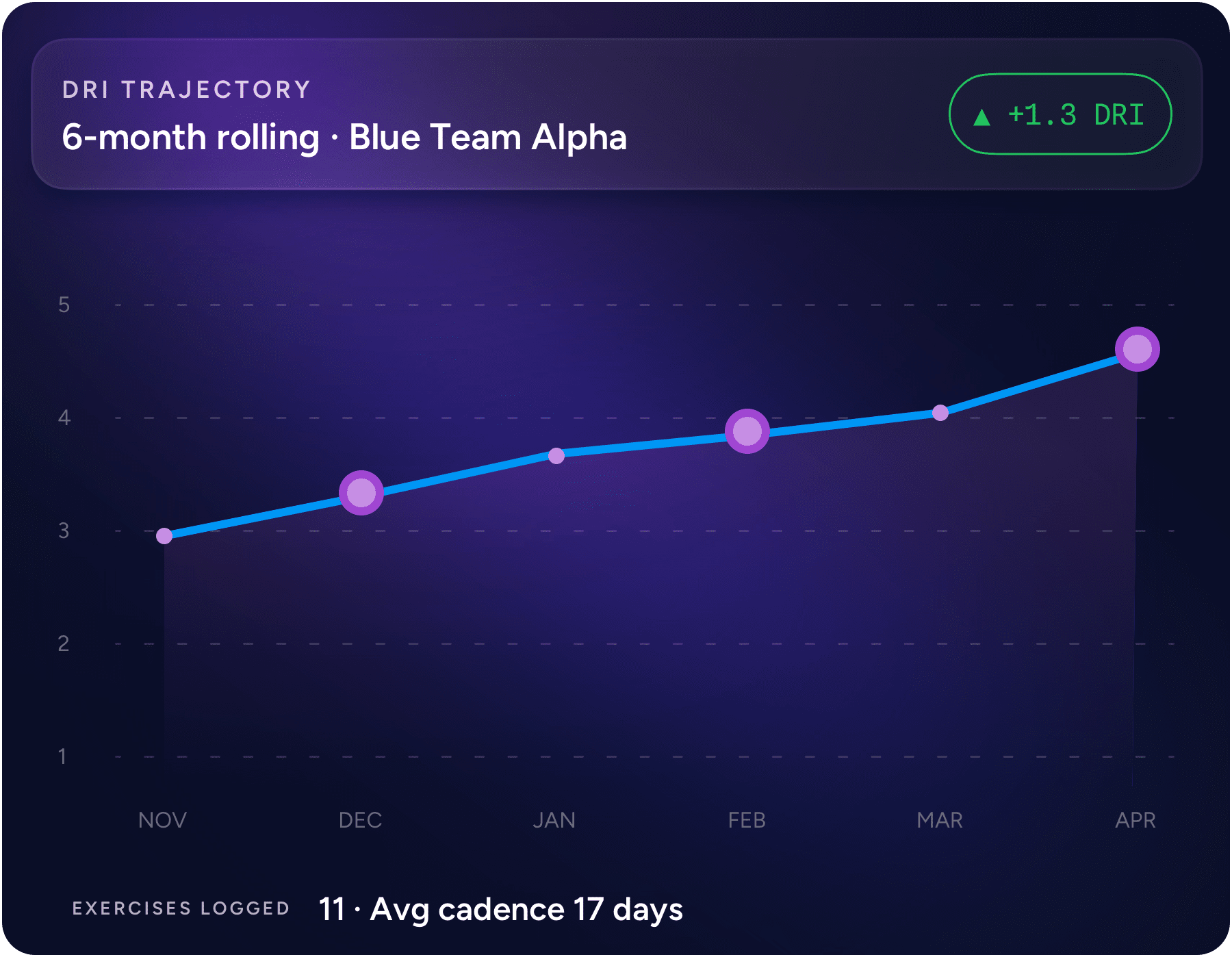
Track measurable progress
A higher DRI reflects demonstrated ability against a more sophisticated threat.
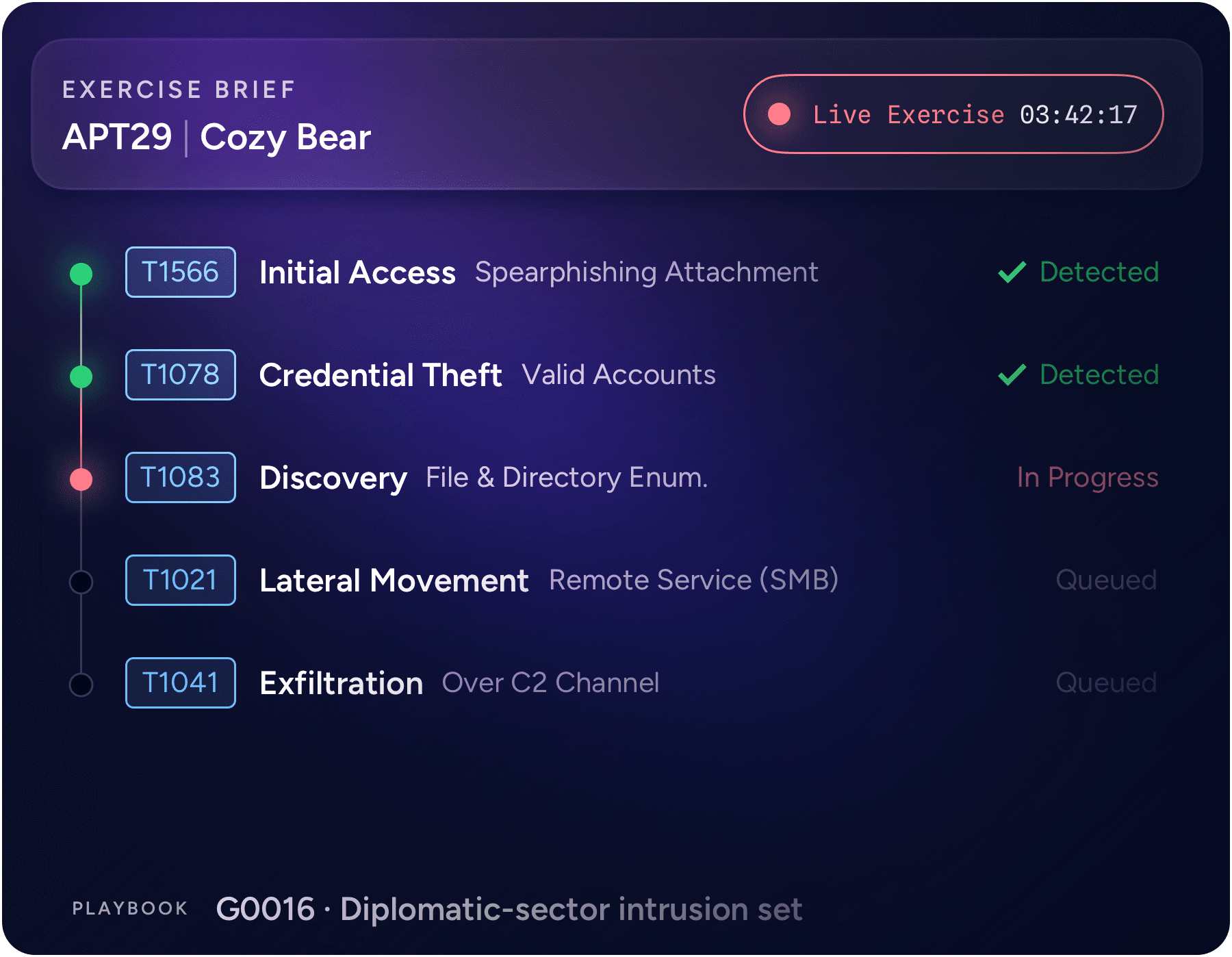
Run a Live-Fire Exercise
Simulate a realistic attack based on a known adversary playbook.
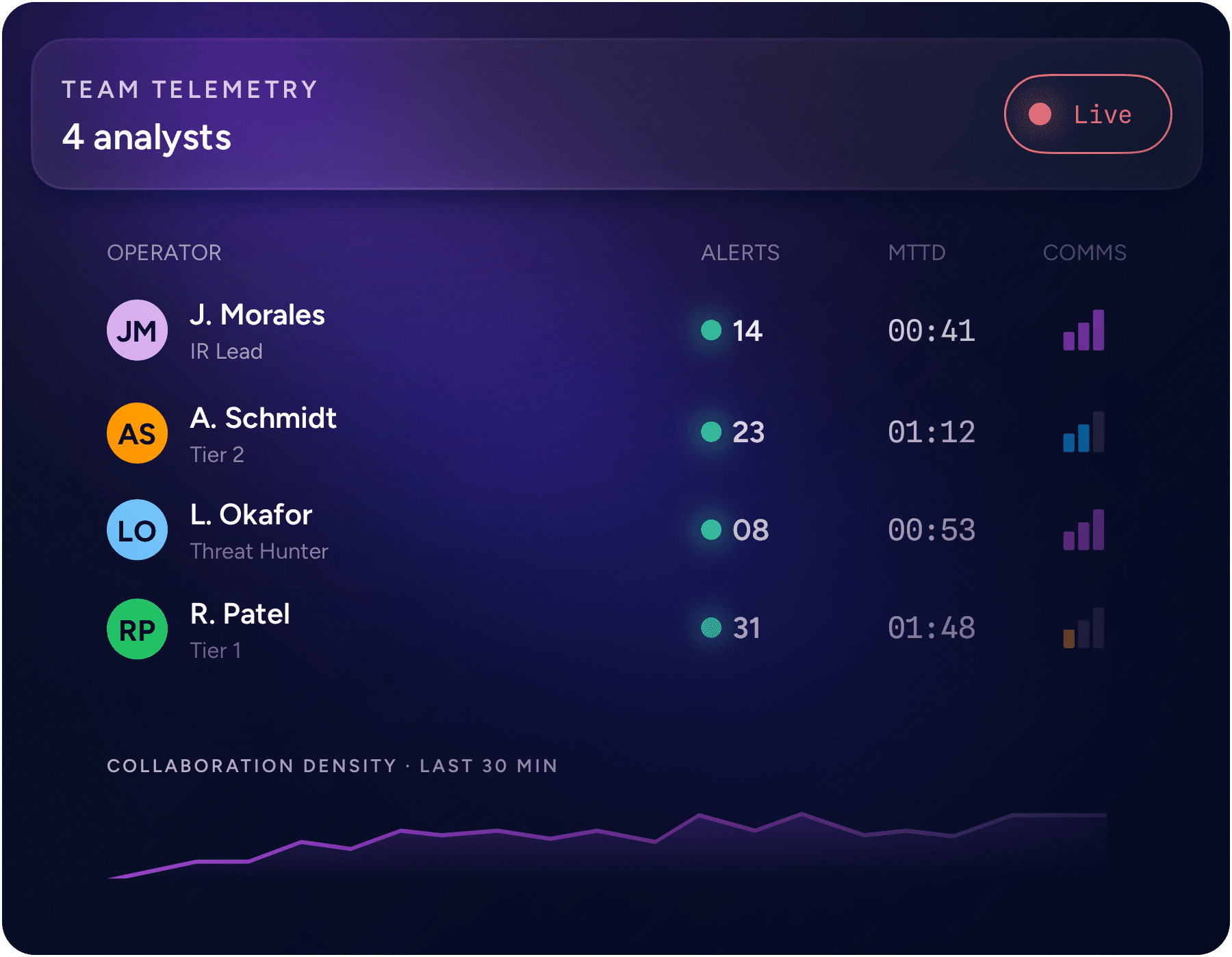
Observe team performance
Evaluate how the entire team detects, communicates, investigates, and responds under pressure.
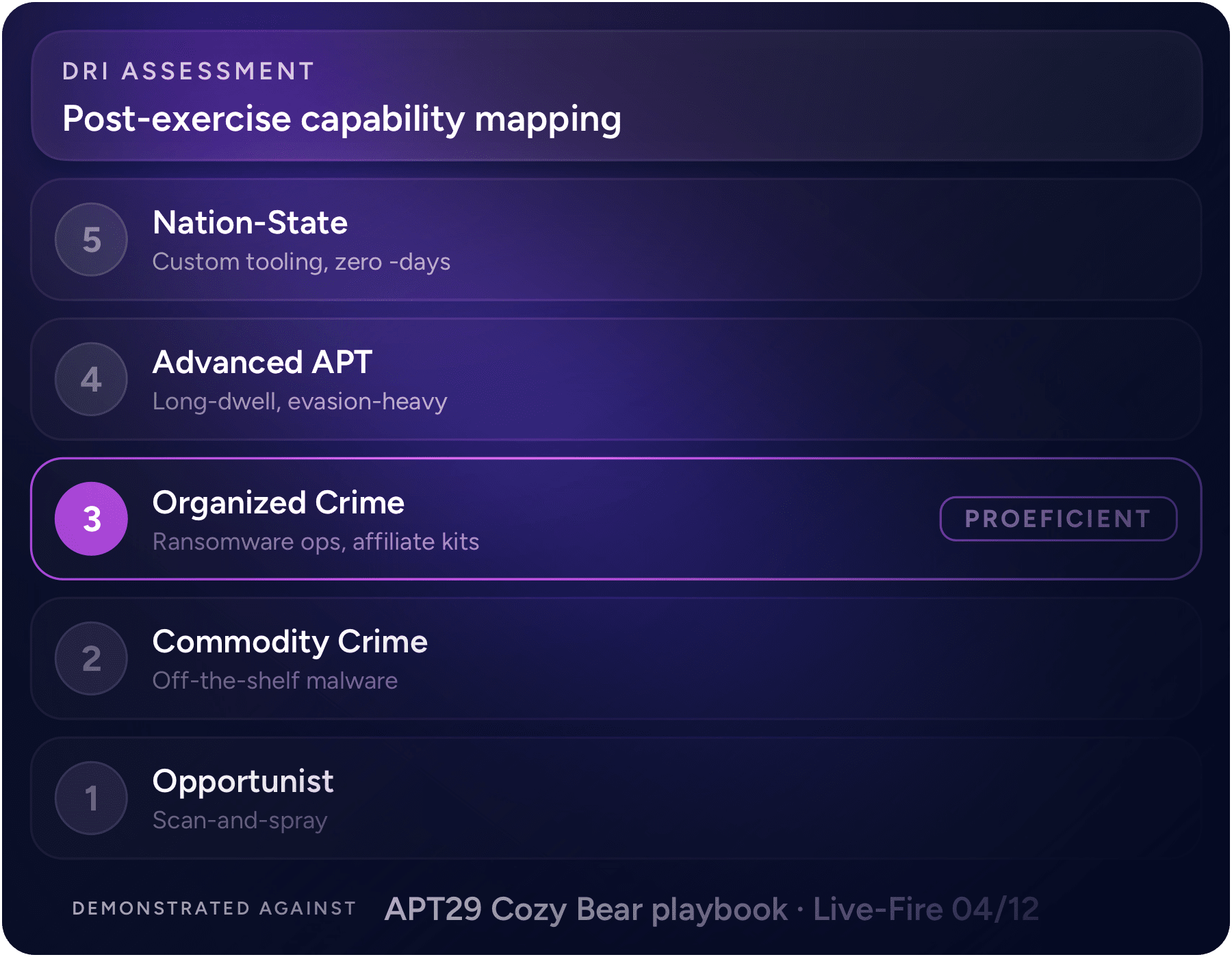
Map the outcome to adversary level
Determine which class of attacker the team can successfully defend against.
Track measurable progress
A higher DRI reflects demonstrated ability against a more sophisticated threat.
 THE FIVE LEVELS
The DRI scale
 TRANSLATION LAYER
DRI gives cyber teams and executives a shared language
DRI
Cyber team language
Executive language
DRI 1
Automated scans, exploit kits
Script kiddies targeting anyone unpatched
DRI 2
Phishing, credential theft
Opportunistic attacks targeting SMBs, weak controls
DRI 3
Custom malware, C2, lateral movement
Organized crime targeting mid-market, finance
DRI 4
ATT&CK playbooks, living-off-the-land
Advanced threat targeting critical infrastructure
DRI 5
APTs, zero-days, supply chain
Nation-state targeting governments, utilities
 TRANSLATION LAYER
DRI as a strategic planning tool
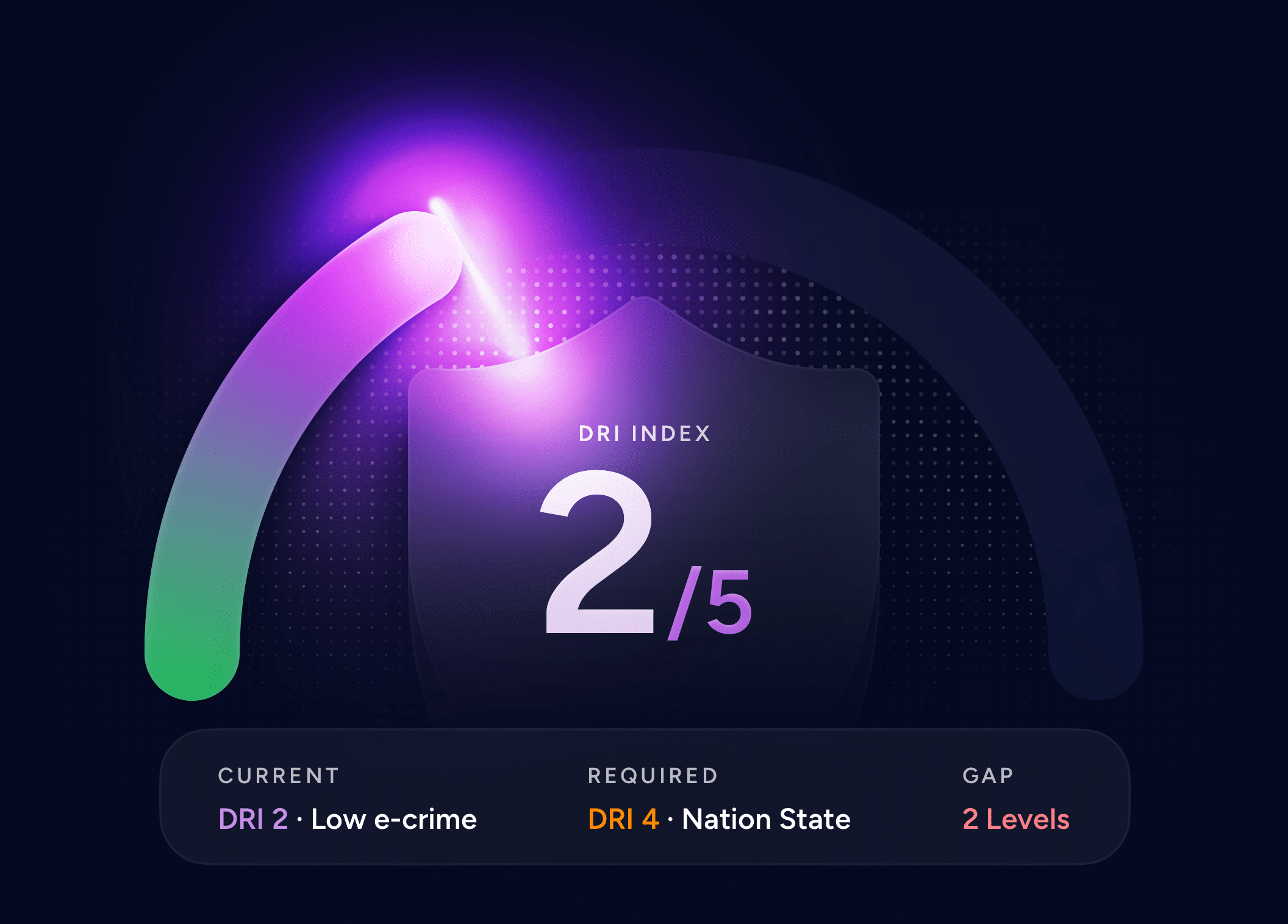
Once you can measure defensive capability against a consistent external scale, you unlock the ability to set strategic goals.
Current DRI - A measured outcome
What adversary class can our team successfully defend against today?
This comes from Live-Fire Exercise results.
The Gap
The investment case, in language executives already understand.
Required DRI - A business decision
What adversary class targets organizations like ours?
This is the threat-informed capability target.


 CLARITY
What DRI is, and what it isn't.
The Defense Readiness Index is not a training metric. Training is preparation. DRI measures performance. A team that trained 1,000 hours but never successfully completed a DRI 3 exercise is still a DRI 2 team.
Outcome measures from live fire exercises against real adversary playbooks
- Team successfully defended against a DRI 2 exercise
- Team completed a DRI 3 exercise (first time, measurable progress)
- Team attempted DRI 4, partially succeeded (gap identified)
Internal activity metrics: Invisible to the real threat landscape
- Training hours logged
- Course completion rate
- Self-assessed maturity score
- Number of certifications held
Can our team defend against the adversaries that are actually targeting organisations like ours?
Everything else — the scale, the exercises, the measurement — exists to answer that question clearly.